
"Tokyo coffee trends"
194 article(s) found
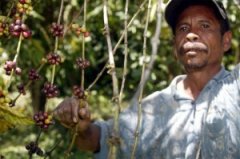
East Timor coffee organic coffee beans
East Timorese Coffee Natural Organic Coffee beans the most famous in East Timor is organic coffee, which is interestingly related to the deterioration of law and order in the independence movement, as chemical fertilizers and pesticides cannot be transported to remote coffee fields. Coffee farmers rarely spray pesticides and grow all of them with natural organic fertilizers. Statistics also show that the export volume of Arabica organic coffee in East Timor is higher than that of Elaraby who sprayed pesticides.

Boutique East Timor coffee natural organic coffee beans
East Timorese Coffee Natural Organic Coffee beans the most famous in East Timor is organic coffee, which is interestingly related to the deterioration of law and order in the independence movement, as chemical fertilizers and pesticides cannot be transported to remote coffee fields. Coffee farmers rarely spray pesticides and grow all of them with natural organic fertilizers. Statistics also show that the export volume of Arabica organic coffee in East Timor is higher than that of Elaraby who sprayed pesticides.

Can coffee that once awakened the world save brick-and-mortar retailers?
For physical stores, this is the worst of times, but also the best of times. In what direction should physical stores transform and upgrade? Maybe this article will give you some inspiration. The dilemma of brick-and-mortar retail is undeniable, e-commerce is rampant, and the tide of physical store closures is more intense than ever. But it is also an era of survival of the fittest: the rise of the middle class, the escalation of consumption, and consumer ownership.

Talking about the champion of Chinese barista
Q1: please share the key to winning the award that year? Q2: has there been any change in your career path since you won the championship? Q3: in your opinion, what changes have taken place in the Chinese coffee market in recent years, especially how does the development direction of boutique coffee affect you? Q4: if you compete again, what do you think is different from the past? What advice do you have for new baristas? A1: first of all, competition

Dialogue 1: What advice do you have for new baristas?
Q1: Please share the key to your award this year. Q2: After winning the championship, did your career path change? Q3: In your opinion, what changes have taken place in the coffee market in China in recent years, especially in the development direction of fine coffee? Q4: If you compete again, how do you feel different from the past? What advice do you have for new baristas? A1: First of all, the game.
Roasting process of boutique coffee beans and matters needing attention
Among the many factors affecting the taste and flavor of coffee, roasting is the most important link. And baking itself is both a science and an art. During the roasting process of 8-20 minutes, raw coffee beans (Green coffee been) produce a series of complex changes: from the appearance, the coffee beans gradually change from light green to light yellow, light brown, brown, dark brown, such as

The Secret of success of Chinese Barista Champion in the most complete interview
Q1: please share the crux of your award? Q2: has there been any change in your career path after winning the championship? Q3: in your opinion, what changes have taken place in the Chinese coffee market over the years, and what is the impact of leftist favouritism in masterpiece coffee on you? Q4: if you compete again, what do you think is the difference from the past? Do you have any suggestions for new baristas? A1: first of all, angle
How much do you know about French coffee?
When it comes to Bordeaux in France, people may think more of the world-famous Bordeaux wine. But in fact, the commodity coffee in world trade has been closely related to the city of Bordeaux for many years. The first coffee shop in Europe appeared in the mid-17th century. With the development of coffee trade, the two French ports Le Alpha and Bordeaux have gradually become imports of coffee beans.

2007 Tim Wendelboe interview (BGT)
About Tim Wendelboe 1998 ~ he joined Stockfleths as a full-time barista and started his coffee career at the age of 19. 1999 ~ achieve Stockfleths branch manager, and participate in Norwegian Barista Championship for the first time to get the fifth. 2000 ~ won the runner-up of Norwegian Barista Championship, the champion of that year Robert Thor
Nilu Coffee surpasses Starbucks
Although Starbucks is sweeping the world, a small company, which competes with it in the UK, has not been defeated, but has stood out. The return on assets has surpassed Starbucks for four years in a row, the store has expanded at an average annual rate of 38%, and its share price has risen 15 times in three years. The reason is that it implements the essence of the industry excavated by Starbucks: experiential consumption. It turns out that if a small company has a thorough grasp of the industry,

History of introduction and expansion of Coffee in China in the early stage of Coffee Development (5)
1. From the first peak period of the development of China's coffee industry (1952-1961) to the late 1940s, according to recorded figures, there are 2173.33 hectares of rubber plantations in Hainan Island, with a total of 867600 rubber trees, with an annual output of 199,000 tons of dry rubber, and more than 300,000 coffee plants. the annual output of coffee beans is 1 ton. According to a survey in the early 1950s, there was a large amount of coffee left in Fushan area of Chengmai County, with a total of 70,000.

History of introduction and expansion of Coffee in early China (5)
1. From the first peak period of the development of China's coffee industry (1952-1961) to the late 1940s, according to recorded figures, there are 2173.33 hectares of rubber plantations in Hainan Island, with a total of 867600 rubber trees, with an annual output of 199,000 tons of dry rubber, and more than 300,000 coffee plants. the annual output of coffee beans is 1 ton. According to a survey in the early 1950s, there was a large amount of coffee left in Fushan area of Chengmai County, with a total of 70,000.
Coffee planting History of Coffee introduction and expansion in China in the early stage (5)
1. From the first peak period of the development of China's coffee industry (1952-1961) to the late 1940s, according to recorded figures, there are 2173.33 hectares of rubber plantations in Hainan Island, with a total of 867600 rubber trees, with an annual output of 199,000 tons of dry rubber, and more than 300,000 coffee plants. the annual output of coffee beans is 1 ton. According to a survey in the early 1950s, there was a large amount of coffee left in Fushan area of Chengmai County, with a total of 70,000.
The History of Coffee introduction and expansion in China in the early stage (5)
1. From the first peak period of the development of China's coffee industry (1952-1961) to the late 1940s, according to recorded figures, there are 2173.33 hectares of rubber plantations in Hainan Island, with a total of 867600 rubber trees, with an annual output of 199,000 tons of dry rubber, and more than 300,000 coffee plants. the annual output of coffee beans is 1 ton. According to a survey in the early 1950s, there was a large amount of coffee left in Fushan area of Chengmai County, with a total of 70,000.